
4/5
Sunday November, 16, 2014 at 5:29 PM
I think this site is very kid friendly And can teach you a lot about the clag history


"I pledge Allegiance to the flag, | 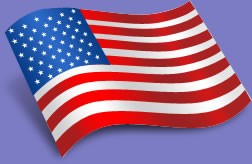 |
The colors of the Flag: the red is for valor, the white for hope purity
of life, the blue is the color of heaven, for reverence to God.
The
star symbolized dominion and sovereignty. The constellation of the stars
within the union, one star for each state, is emblematic of the Federal
Constitution, which reserves to the States their individual sovereignty
except as to rights delegated by them to the Federal Government.
President George Washington said:
"We take the stars from Heaven, the red from our mother country, separating it by white stripes, thus showing that we have separated from her, and the white stripes shall go down to posterity representing Liberty."
 THE FLAG was first authorized by Congress June 14, 1777. This date is now observed as Flag Day throughout America. The United States Flag is the third oldest of the National Standards of the world, even older than Britain's Union Jack or the Tricolor of France. At that time, the First official flag of the United States was designed with 13 stars and 13 stripes to represent the 13 existing colonies. THE FLAG was first flown from Fort Stanwix, on the site of the present city of Rome, New York, on August 3, 1777. It was first under fire for three days later in the Battle of Oriskany, August 6, 1777.
 In 1791, Vermont was admitted to the union, followed by Kentucky in 1792. The number of stars and stripes was accordingly raised to 15. In 1812 the flag was flown over Fort McHenry, which inspired Francis Scott Key to write the Star Spangled Banner poem, which was put to music to become America's national anthem. Presidents George Washington, John Adams, Thomas Jefferson, James Madison and James Monroe all served under this flag.
An act of Congress in 1818 reduced the number of stripes on the flag to thirteen. And a star would be added for each new state until 1960.
 After Hawaii had been added, in 1960, the 50-star flag will be America's longest serving flag. Presidents Dwight D. Eisenhower, John F. Kennedy, Lyndon B. Johnson, Richard M. Nixon, Gerald R. Ford, Jimmy Carter, Ronald W. Reagan, George Bush, William J. Clinton, George W. Bush and Barack Obama served under this flag.
1 vote(s) - Average rating 4/5
Sunday November, 16, 2014 at 5:29 PM
I think this site is very kid friendly And can teach you a lot about the clag history